An African-founded technology group

Building Africa’s Technological Future.

Nk’AfrI Technology Group is the parent organization behind a growing portfolio of technology businesses. We research, develop, own, operate and scale artificial intelligence products, software platforms and digital infrastructure that solve important problems — in Africa first, and in the rest of the world after.

Now being established Founded by Blaise Irankunda First portfolio business: PAMOZIQ

Kigali, Rwanda

We research the ground first — the real problems people, businesses and institutions face, studied market by market, with verified facts kept separate from assumptions, before anything is built.

We develop the technology that answers those problems — artificial intelligence where it earns its place, and simpler tools where they serve the customer better.

We own what we build — the products, the brands and the intellectual property stay under African ownership for the long term, not imported, rented or licensed in from outside.

We operate each business day to day under the parent’s governance — shared infrastructure, finance, legal and security — while it proves itself with real customers.

We scale only what has proved itself — into new sectors and new countries, one market at a time, and into global markets only after Africa.

Market Principle

Technology built to solve Africa’s problems first — other markets only once it has proved itself here.

The founding market principle · set by the founder, Blaise Irankunda, 2026

  • Africa is the primary market, not an expansion step. Every Nk’AfrI product is designed for African customers first, and proves itself there before anywhere else.
  • Local realities are design inputs. Languages, mobile money, connectivity, devices and purchasing power shape the product from the first sketch — they are never afterthoughts.
  • Africa is not one market. Each country is evaluated on its own needs, laws, languages and partners. We enter markets on evidence, not all at once.

Explore

The group, page by page

Start where your interest is — the group itself, the purpose behind it, the portfolio it is building, or the road ahead.

First portfolio business: PAMOZIQ — the AI operating system for the beauty industry and wellness clinics, filed under Sector 03, Beauty, Wellness & Personal Care. See the project page →

The geometric bands throughout are original patterns inspired by Imigongo, Rwanda’s traditional geometric art — a reminder that Nk’AfrI is an Africa-based group, building for Africa first. The story behind them →

The Group

A parent company, not a single product

Nk’AfrI Technology Group is being established to build multiple independent technology businesses under one parent organization — across industries, countries and customer segments. Its products, brands and ventures sit underneath it; the group itself provides the strategy, research, shared infrastructure and governance that let each one grow.

The ambition is an Africa where technology is not merely imported and consumed, but researched, developed, owned, commercialized and exported by African-founded organizations. Nk’AfrI is being built, deliberately and in the open, to be one of those organizations.

The group’s inspiration is Pan-African: unity and self-determination, applied to every sector through technology. That is why the portfolio is not limited to one industry — the same founding conviction runs from the first product to every venture that follows it.

Even the patterns carry that conviction. They are original designs in the group’s own earth-and-clay colours, inspired by Imigongo, Rwanda’s traditional geometric art, traditionally made by women — there because this is an Africa-based group, building for Africa, and saying so quietly, everywhere.

Everything the group does follows five commitments, in order — research, develop, own, operate, scale — set out in full on the Purpose page, where the method belongs: between the challenge it answers and the businesses that carry it out.

Although artificial intelligence is central to the early portfolio, Nk’AfrI is not only an AI company. Its mandate is broad enough to encompass technologies that do not yet exist — in software, automation, energy, agriculture, health, finance and beyond.

Central functions of the parent

  • Corporate strategy & governance
  • Research & development
  • Shared AI & software infrastructure
  • Product engineering
  • Commercialization & distribution
  • Finance & investment
  • Legal, privacy, security & compliance
  • Intellectual-property management
  • Venture incubation & portfolio management

Where the group stands today

Stage
In formation. The founding plan and portfolio structure are set; formal incorporation is in preparation and has not yet been completed.
Portfolio
One business: PAMOZIQ, in the Beauty, Wellness & Personal Care sector, currently at pilot stage.
Structure
Products begin as brands under the parent; separate subsidiaries are created only when investment, regulation or strategy justifies them.

The Group So Far

A young group, real milestones

The group is new, and its record is short enough to state in full. These are the milestones that made it what it is today — nothing projected, nothing dressed up.

2026 · Founded

Founded by Blaise Irankunda

Nk’AfrI Technology Group is founded as an African-founded parent for technology businesses — to research, develop, own, operate and scale them, Africa first. Formal incorporation is in preparation.

October 2026 · Name

Name screened

The name Nk’AfrI was screened across trademark records and the web: no company was found using it. A preliminary screen, not formal clearance — that comes with incorporation, on legal advice.

October 2026 · Identity

Official logo finalised

The group’s mark is adopted in its final form: a single circuit-traced N with the shape of Africa cut through it, hill-contour arcs inside the continent, and gold nodes.

October 2026 · Portfolio

Sector map set

The portfolio is organised into the twelve sectors a country and its people need. Sector 03 — Beauty, Wellness & Personal Care — stands active with PAMOZIQ; the other eleven are open, awaiting their first designated projects.

Purpose, Vision & Mission

Why Nk’AfrI exists

The group serves one purpose — solving Africa’s problems through technology — and it is stated in full on its own page: the challenge in researched numbers, the answer the group exists to give, the method it works by, and the vision and mission in depth.

One purpose, stated in full

Too little work, too little economic security, too little well-being — measured, sourced, and answered as one condition, not three separate crises. That is the ground this whole group stands on.

What We Build

Focus areas, today and over time

The group’s early work concentrates on three connected areas. Around them sits a shared technology foundation every portfolio business can draw on — and a wider field of industries the group intends to enter as it grows.

FOCUS 01

AI products

Practical artificial intelligence that does real work for businesses and institutions — built to be useful and commercially viable, adapted to African languages and local context, and honest about its limits, with people in control where judgment matters.

FOCUS 02

Software platforms

Industry platforms that run the operations of the businesses they serve — each with its own brand, customers and business model, developed through the group’s research and validation process rather than built on assumption.

FOCUS 03

Digital infrastructure

The underlying systems African businesses and institutions depend on: secure cloud foundations, identity, payments and messaging integrations, data and analytics — shared where sharing genuinely helps, independent where it must be.

Shared capabilities under development

  • AI model integrations & evaluation
  • African-language processing & speech
  • Data processing & analytics
  • Secure cloud infrastructure
  • Identity & access management
  • Payments & messaging integrations
  • APIs & reusable components
  • Security monitoring & reliability
  • Product analytics & reporting

Organised by sector

The portfolio is organised by sector — twelve sectors covering everything a country and its people need, from agriculture and health to money, energy and governance. None of these sectors is the group’s invention — they already structure daily life. Inside each one, Nk’AfrI studies where people and businesses are held back and where the openings lie, and responds with technology built for those realities. Every project is filed under exactly one sector, and each sector is evaluated one at a time through the group’s ten questions.

See the sector map →

Business Model

Each business stands on its own numbers

Nk’AfrI is designed to develop multiple revenue-generating businesses over time. There is no single group-wide formula: every business carries its own commercial strategy, cost structure, revenue model and performance indicators.

Subscriptions suit some products; they are never assumed for all of them, and a socially important problem is not automatically a profitable one. Commercial opportunities are pursued on their evidence, while strategic research and public-interest work are evaluated separately, on their own terms.

As ventures mature, the group can also hold equity ownership in the subsidiaries and ventures it creates — so value built inside the portfolio stays visible on the group’s own books, under documented governance.

The models on the right are the directions the portfolio is designed to use as its businesses launch and prove themselves. Today, the group’s first business is at pilot stage, and no revenue is claimed for the group.

Potential revenue sources

  • Monthly and annual software subscriptions
  • Usage-based AI services
  • Enterprise software contracts
  • Licensing of technology and intellectual property
  • Transaction fees from eligible platforms
  • Implementation and integration services
  • Research and development contracts
  • Government and institutional contracts
  • Equity ownership in subsidiaries and ventures
  • Strategic partnerships and acquisitions

← Home

Portfolio

The portfolio, organised by sector

The group’s vision reaches every sector a country and its people need. Those sectors are not Nk’AfrI’s creation — they already carry the daily life of every country. The group’s role is to work inside each one: to understand where it strains, where it is underserved, and where technology can make a measurable difference. Every project, product or service the group builds is filed under exactly one sector: the sector it serves.

Open a sector to read it in full — the landscape today, the sector in numbers, drawn from published research, and its challenges stated plainly, with sources. Where a sector already holds a project, open the project for its full details and its own website.

An open sector holds no project, and implies none. It is a field the group is watching: research there begins by spotting the challenges and opportunities already inside it. A sector becomes active only when a real project passes the group’s gates and the founder designates it into that sector.

How projects are filed: when a project passes the group’s ten mission questions and the founder designates it, it is added here under its sector — one project, one sector. The open sectors stay on the map because the vision covers them; they hold no projects today, and no project will be announced before it exists.

← Sector 03 — Beauty, Wellness & Personal Care · All sectors

PAMOZIQ

Pilot stage

Portfolio business No. 1 · Sector 03 — Beauty, Wellness & Personal Care · A business of Nk’AfrI Technology Group

The AI operating system for the beauty industry and wellness clinics — it takes care of everything that happens in the business, except performing the service on the client.

Front desk and client communication, booking, client management, stock, money, marketing, team coordination and owner intelligence are handled by the system; the hands-on craft stays human. Its AI receptionist is included in every plan, answers only from verified business information, and hands over to a person the moment a client asks, the answer isn’t certain, or professional judgment is needed.

Offering Ten products in four plans — Essential, Advanced, Intelligence and Ultimate
Stage Working product built; pilot recruitment under way with beauty and wellness businesses
Market direction Africa first — early validation is running where the founder is based while the African launch is prepared

The published plans

Essential

$19 / month

AI receptionist and appointment management — for reception, bookings and client organisation.

1. AI Receptionist · 2. Appointment Management · 3. Client Management

Advanced

$49 / month

Client growth and daily business control — everything in Essential, plus the money, stock and marketing.

Adds 4. Inventory Management · 5. Financial Management · 6. AI Marketing

Intelligence

$99 / month

Team coordination and operational intelligence — recommended for growing teams.

Adds 7. Staff Management · 8. AI Business Intelligence · 9. Service & Consultation Management

Ultimate

$199 / month

Centralised multi-location management, with organisation-wide controls and location-specific permissions.

Adds 10. Multi-Location Management

Plan names, contents and prices as published on the PAMOZIQ website. The AI receptionist is included in every plan; usage allowances and routing sophistication scale by tier.

The eight jobs PAMOZIQ is built to handle

JOB 01

Front desk & communication

Client questions, directions, policies and follow-ups — answered in the business’s own assistant name and voice, around the clock.

JOB 02

Booking & the schedule

Books, reschedules and cancels against real open slots, runs the waitlist, sends reminders and works to prevent no-shows.

JOB 03

Clients

Remembers history, preferences and important details; runs intake and consent tracking, loyalty, packages and “you’re due” rebooking prompts.

JOB 04

Money

Deposits and payments, the daily ledger and reconciliation, staff commissions and payslips, and owner reporting that shows its method.

JOB 05

Marketing & reputation

Drafts and schedules content, runs campaigns to opted-in clients only, requests reviews at the right moment and reports what is working.

JOB 06

Team

Staff roster and roles, rotas and time-off, per-person performance, and onboarding checklists for new staff.

JOB 07

Stock & retail

Inventory that deducts as services complete, low-stock alerts, draft purchase orders and retail sales alongside services.

JOB 08

Owner intelligence

A morning briefing on the day’s book, gaps, money and stock; instant alerts; and one control seat over every location.

Hard guardrails, built in: PAMOZIQ never gives medical advice, never quotes a price outside the business’s own approved price book, and never stores card numbers — and a complaint, a refund demand, or a simple “let me talk to a person” goes to a human instantly. The one thing it never does is the hands-on service itself: the craft stays with the professional.

Back this project, or follow it closely

PAMOZIQ is the group’s proof case: the first business through the pipeline, at pilot stage today. The full investment picture — stage, what capital would fund, how the gates protect it, and the group’s honest current position — is set out behind the Invest button.

How We Work

One repeatable process, from problem to portfolio

Every Nk’AfrI initiative moves through the same eight-step research and development pipeline, with two hard gates that stop spending when the evidence isn’t there.

1

Problem discovery

Research the real challenges faced by people, businesses, industries and institutions across African countries — without assuming the same problem, or the same needs, exist in every market.

2

Opportunity assessment

Estimate the problem’s size and severity, the potential customer base, willingness to pay, the competitive landscape and realistic revenue — keeping verified facts separate from assumptions and forecasts.

3

Solution design

Decide whether the problem is best answered by AI, conventional software, automation, hardware, a marketplace, a service — or a combination. AI is never forced where a simpler solution is better.

4

Validation

Interview potential customers, test prototypes and seek pilot commitments before investing heavily.

5

Product development

Build a secure, reliable minimum viable product on existing infrastructure where appropriate — and build proprietary technology where it creates a real strategic advantage.

6

Commercialization

Launch, set pricing, acquire customers, measure outcomes, and improve the product based on actual usage.

7

Scaling

Expand into other industries or countries only after evidence of demand, operational feasibility and a sustainable business model.

8

Portfolio review

Keep investing in what demonstrates value. Redesign, pause, partner on, or discontinue what fails to meet the agreed criteria.

Gate One

Before heavy building

No initiative moves into full product development without real pilot interest or commitments from the customers it is meant to serve.

Gate Two

Before scaling

No initiative expands into a new country or industry without evidence of demand and a sustainable model in its current market.

Principles

How Nk’AfrI is run

Ten principles govern every decision in the group — from which problems we take on, to how each business treats its customers and its numbers.

01Problem-solving before hype
02Evidence before assumptions
03Innovation with commercial discipline
04African talent, global standards
05Customer value before unnecessary complexity
06Responsible and secure technology
07Transparent governance and accountability
08Long-term ownership of valuable intellectual property
09Collaboration across products and disciplines
10Continuous research, experimentation and improvement

Founder’s Letter

Why this group exists

Draft · prepared for the founder’s review

Read it as a document

Why this group exists, in the founder’s own framing: the conviction behind Nk’AfrI, the discipline it intends to keep, and the honest stage it stands at today. Read the letter in full on its own page, or download the PDF to keep and share.

Status of the letter: a draft, prepared from the founder’s stated philosophy for his review. It becomes the group’s published letter only when he approves its final wording.

Take the group with you

The Group Profile sets out the whole group on one page — who we are, the twelve sectors, PAMOZIQ, and our honest in-formation status — as a clean document you can download, keep and share.

← Home

Our Purpose

One purpose: solving Africa’s problems, through technology

Nk’AfrI Technology Group is easiest to misunderstand as twelve separate ambitions — a sector here, a sector there. It is the opposite. The group serves one purpose: to confront the problems that hold African people back — too little work, too little economic security, too little well-being — and to answer them with technology that Africa researches, owns and runs itself. The twelve sectors are the fields where that purpose is carried out. This page states the purpose in full: the challenge as the research measures it, the answer the group exists to give, and the vision and mission behind both.

The Challenge

Three problems, woven together

Unemployment, weak economies and poor well-being are usually discussed as separate crises. On the ground they are one condition with three faces: a young person without decent work cannot build a livelihood; a household without a livelihood cannot protect its health or its children’s schooling; and a population carrying illness and lost learning cannot power an economy. Any serious answer has to work on all three at once — which is why the group is built across every sector of national life, not inside one industry.

The challenge · 01 — Work

A generation arriving faster than the jobs

Between ten and twelve million young Africans enter the labour market every year, while only around three million formal jobs are created to receive them (African Development Bank). The gap does not show up mainly as open unemployment — most people cannot afford to be unemployed. It shows up as informal work: some 85% of all employment in Africa is informal, the highest rate of any region in the world (ILO). Informal work usually means no contract, no records, no credit history, no protection when illness or a bad season arrives — effort without a ladder. And for millions of young people even that foothold is missing: 53 million young people in Sub-Saharan Africa — 21.9% of youth — were not in employment, education or training in 2023 (ILO).

10–12myoung Africans enter the labour market every yearAfrican Development Bank ↑
~3mformal jobs are created each year against those 10–12 million entrantsAfrican Development Bank ↑
85%of employment in Africa is informal — the highest rate of any world region; in agriculture it is 98%ILO, 2026 ↑
21.9%of Sub-Saharan youth are not in employment, education or training — 53 million young people in 2023ILO, Global Employment Trends for Youth, 2024 ↑

The challenge · 02 — Livelihoods

Economies that leave most people exposed

Beneath the jobs gap sits a thinner economic floor. In 2024, 42% of adults in Sub-Saharan Africa still held no account of any kind — no bank account, no mobile-money account (World Bank Global Findex). The small and medium businesses that employ most people face an estimated financing gap above US$331 billion (IFC): they trade, but they cannot borrow to grow. The land tells the same story — agriculture carries about 46% of all employment, yet average cereal yields of 1.68 tonnes per hectare run at barely two-fifths of the global average of 4.2 tonnes (AfDB). Around 600 million people lived without electricity in 2024 (IEA), and only 19.1% of Africa’s population is covered by even one social-protection benefit — the lowest coverage of any region (ILO). Work hard, and one shock can still take everything: that is the economic condition the purpose answers.

42%of adults in Sub-Saharan Africa still held no account of any kind in 2024World Bank, Global Findex, 2025 ↑
>US$331bnthe estimated financing gap for small and medium enterprises in Africa (IFC estimates vary by scope)IFC, via PAFTRAC, 2026 ↑
1.68 t/haaverage cereal yield in Africa in 2024, against a global average of about 4.2 t/haAfDB Annual Development Effectiveness Review, 2026 ↑
~600mpeople in Africa lived without electricity in 2024 — about 47% of the populationIEA / Tracking SDG7, 2025–26 ↑
19.1%of Africa’s population is covered by at least one social-protection benefit — the lowest of any world regionILO, World Social Protection Report ↑

The challenge · 03 — Well-being

Health and learning, carried by too few hands

Well-being is where the other two problems land on the body and the mind. Africa carries about 24% of the world’s disease burden with roughly 3% of its health workers and under 1% of global health spending (WHO) — and the workforce gap is projected to reach a shortfall of 6.1 million health workers in the WHO African Region by 2030. Learning is under the same strain: 108 million children and youth in Sub-Saharan Africa were out of school in 2024 (UNESCO), and learning poverty — children unable to read and understand a simple text by age ten — stands at 89–90% (World Bank / UNESCO). People cannot work their way out of poverty while sick, unlettered or caring for those who are; an economy cannot compound skills it never built.

24%of the world’s disease burden is carried by Africa, with about 3% of the world’s health workers and under 1% of global health spendingWHO Global Health Observatory, 2023 ↑
6.1mhealth workers — the projected shortfall in the WHO African Region by 2030WHO AFRO, BMJ Global Health, 2022 ↑
108mchildren and youth out of school in Sub-Saharan Africa in 2024, up from 98 million in 2022UNESCO GEM Report / UIS ↑
89–90%learning poverty in Sub-Saharan Africa — children unable to read and understand a simple text by age 10World Bank / UNESCO UIS, 2022–24 ↑

Every figure above is taken from the published source linked beneath it — the same research discipline the group applies inside each sector.

The Solution

A standing answer, not a single product

Problems of this scale are not answered by an app, a campaign or a fund that spends itself out. They are answered by capability that stays: organizations rooted in Africa that can study a problem properly, build the technology that answers it, and keep that technology working, improving and African-owned for decades. Nk’AfrI Technology Group is being built to be that capability — a parent organization standing behind a growing portfolio of technology businesses, one in each field of national life where the strain is measured.

Technology is the lever for a practical reason. The shortages above are shortages of coordination as much as of resources: farmers without records, clinics without systems, traders without credit histories, schools without reach. Well-built technology carries records, coordination and reach at a scale people alone cannot — it lets a small team serve a whole market, lets informal work become visible and creditworthy, and lets good practice in one town become standard in fifty. That is why the group’s answer runs through technology in every sector, rather than through charity in one.

Ownership is the other half of the answer. Too much of the technology Africa runs on is researched elsewhere, owned elsewhere and rented back to the people it serves — so the value, the data and the decisions leave the continent with the rent. The group reverses the direction: what it builds is researched here, owned here and operated here, designed from the first sketch for African languages, mobile money, connectivity, devices and purchasing power. And each answer must stand as a real business — commercially sustainable, judged by evidence — because a solution that depends on goodwill dies with the funding round, while a business compounds.

The proof discipline is already running. PAMOZIQ, the group’s first portfolio business, works inside one sector — beauty, wellness and personal care, an industry of informal, record-light businesses much like those measured above — and is at pilot stage today, learning from real businesses before it scales. What it proves about the method will be carried into the next sector, and the next: one purpose, prosecuted field by field, market by market.

The Method

How the purpose is carried out

Five commitments describe everything the group does, in order. They are the bridge between the challenge above and the businesses that answer it.

  • Research

    Study real problems before building anything — the challenges people, businesses and institutions face, examined market by market and sector by sector, with verified facts kept separate from assumptions. The numbers on this page are the method at work: nothing is built on a guess that research could have settled.

  • Develop

    Design and build the technology that answers those problems — artificial intelligence where it earns its place, and simpler tools where they serve the customer better. Local realities — languages, mobile money, connectivity, devices, purchasing power — are design inputs from the first sketch, never afterthoughts.

  • Own

    Hold what is built. The products, the brands and the intellectual property stay under African ownership for the long term, instead of being imported, rented or licensed in from outside — so the value created by solving African problems stays where the problems were solved.

  • Operate

    Run each business day to day under the parent’s governance — shared infrastructure, finance, legal and security — while it proves itself with real customers. The group does not hand its answers to others and hope; it operates them, answers for their numbers, and improves them in the market.

  • Scale

    Grow only what has proved itself: into new sectors and new countries, one market at a time, each entered on its own evidence — and into global markets only after Africa. Scale is earned by proof, never declared by ambition.

Vision & Mission, In Depth

Where this leads, and the work itself

Our Vision

To build one of Africa’s leading technology groups — an organization that identifies the continent’s most important challenges and develops intelligent, practical, commercially sustainable technologies to address them.

The vision is a continent whose defining problems are met by institutions it owns. In that future, the technology behind Africa’s farms, clinics, classrooms, markets and public services is researched, developed and held by African-founded organizations as a matter of course — and a young person entering the labour market meets an economy with more ladders in it than the one measured above. For the group itself, the vision means a diversified portfolio spanning multiple countries, industries and customer segments, intellectual property with lasting value, and a structure serious long-term investors can stand behind — built market by market, never declared before it is earned.

Our Mission

Identify important problems, develop intelligent technological solutions, and transform the strongest solutions into products and businesses that create measurable economic and social value.

The mission is the vision turned into daily work. It runs problem-first, in every sector, without exception: no project enters the portfolio because a technology is fashionable, and none survives on enthusiasm. We do not build AI because AI is fashionable — technology is chosen because it is the right answer to a real problem, and sometimes the right answer is simpler than AI. Every candidate is measured against the ten questions below and held at two hard gates: no heavy building without real pilot interest, and no scaling without evidence of demand and a sustainable model.

Problem first, always

Every proposed project must answer ten questions before it earns a place in the portfolio:

  1. 1. What problem are we solving?
  2. 2. Who experiences the problem?
  3. 3. How costly, frequent, or serious is it?
  4. 4. Who will pay for the solution, or how will it be funded?
  5. 5. Why is AI — or another technology — the appropriate answer?
  1. 6. What alternatives already exist?
  2. 7. What will make our solution meaningfully better?
  3. 8. How will the product generate measurable value?
  4. 9. Can it scale across multiple African markets?
  5. 10. Can it become a sustainable business, or a strategically valuable technology asset?

What we intend to become known for

01 Technology that solves real African problems
02 Useful, commercially viable artificial intelligence
03 African-language and locally adapted AI capabilities
04 Software and digital infrastructure for businesses and institutions
05 Turning promising research into real products and companies
06 Intellectual property and technology businesses with long-term value
07 Partnerships with universities, researchers, entrepreneurs, governments and enterprises
08 Expanding successful products across Africa, then into global markets
09 A corporate structure able to attract serious long-term investors

The Fields

Twelve fields, one purpose

The sectors are not twelve purposes. They are the twelve fields of a country’s life, grouped here by the part of the challenge each one answers — and governance, the twelfth, underpins all three. Open any sector to read its landscape and its challenges in researched numbers.

See the purpose at work

The portfolio is where the purpose meets the ground — twelve researched sectors, one active business, and an honest account of what is still to come.

The Road Ahead

Built in stages, on evidence

This is a sequence, not a schedule — no stage carries a promised date. Each stage unlocks when the one before it has proved itself, under the same two gates that govern every initiative in the group.

Under way

Establish the parent

The group’s identity, founding plan and portfolio structure are set, and its official mark is final. Formal incorporation is in preparation — the founding decisions below come first.

Under way

Prove the first business

PAMOZIQ is at pilot stage, recruiting the beauty and wellness businesses it will learn from. Scaling waits for pilot evidence, not enthusiasm.

Next

Build the shared foundation

The shared AI and software capabilities under development become the foundation every portfolio business can draw on — while each business keeps its own architecture, security boundary and continuity plan.

Ahead

Grow the portfolio

New ventures join only by passing the ten mission questions and the founder’s designation. They start as brands under the parent; separate subsidiaries are created only when investment, regulation or strategy justifies them.

Ahead

Scale, market by market

Successful products expand across Africa one country at a time — each market evaluated on its own needs, languages, payments, laws and partners — and into global markets after Africa.

Three founder decisions come next

These are deliberately left open until they are taken properly. Until they are, the group describes itself exactly as it is: in formation.

Open Decision 01

The final legal name

Confirming “Nk’AfrI Technology Group” as the legal name, with a preliminary trademark screen already clear and an attorney-run full clearance still to come before filing.

Open Decision 02

Jurisdiction & entity

Where the parent incorporates first, and in what form — the choice that unlocks registration, banking and assigning the portfolio’s intellectual property into the group.

Open Decision 03

The near-term venture goal

Whether outside investment is a goal for the coming phase — the answer shapes the entity structure, so it is settled before incorporation, not after.

Partners & Future Investors

Built to be worth backing

Nk’AfrI is being structured from the start — subject to legal advice and its chosen jurisdiction — to accommodate founder ownership, future investors, and employee equity where appropriate, with transparent financial reporting, a clear capitalization table, intellectual property owned by the group, and documented governance.

We intend to build partnerships with African universities, researchers, entrepreneurs, governments and enterprises — the people and institutions who know each market’s problems best. Partnership conversations are welcome now, while the group is being established.

Capital, when the evidence justifies raising it, would fund the work on the right: turning proven products into durable businesses, market by market.

What future capital would fund

  • Developing proprietary technology
  • Recruiting highly skilled people
  • Expanding successful products into additional markets
  • Establishing research facilities
  • Acquiring technology businesses
  • Investing in promising ventures
  • Building regional operations
  • Developing advanced technological infrastructure

A clear statement of position: Nk’AfrI Technology Group is in formation and is not currently offering shares, raising capital, or making any promise of returns. A public listing is a long-term possibility the structure is designed to keep open — it is not a plan with a date, and not a guarantee.

Founder

The person behind the group

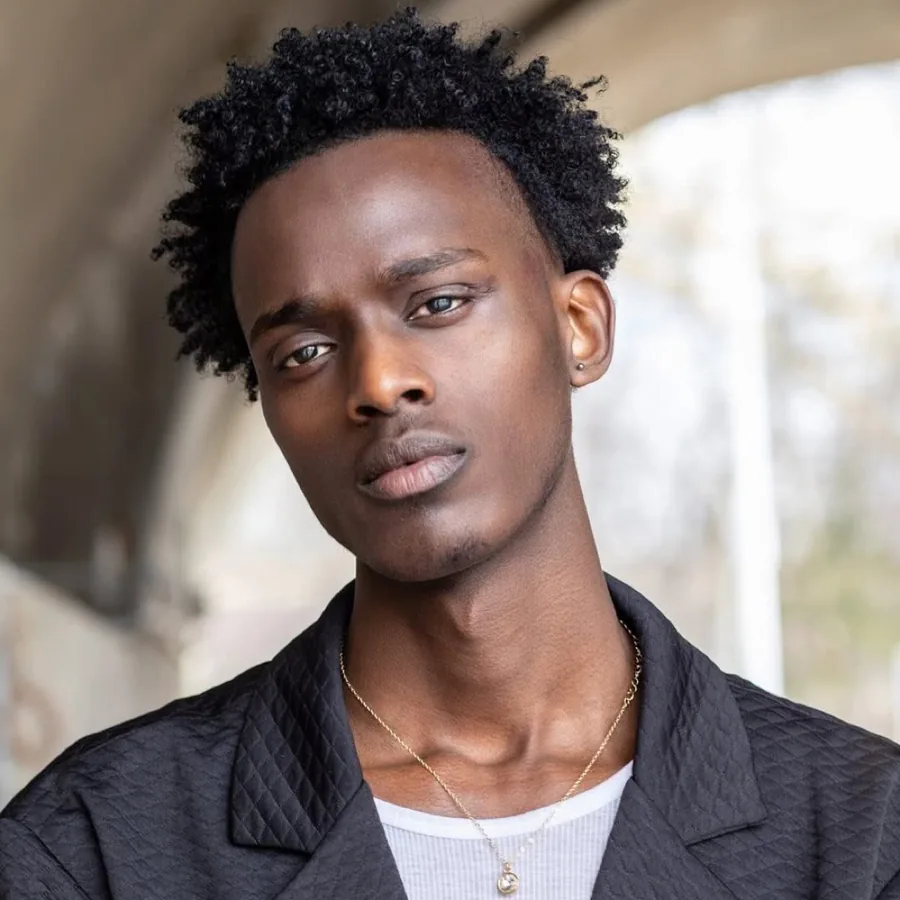
Portrait of Blaise Irankunda, founder of Nk’AfrI Technology Group

Blaise Irankunda

Founder, Nk’AfrI Technology Group

Blaise Irankunda founded Nk’AfrI Technology Group in 2026 to build the parent organization behind his technology ventures — an African-founded group with a long-term institutional mindset, rather than a string of unrelated products.

He leads the group’s strategy, research and product development, and is the founder of PAMOZIQ, its first portfolio business. His work is anchored in Africa — Rwanda in particular — and in the conviction that the continent’s technology should be researched, developed and owned by African-founded organizations, then shared with the world.

Questions

Straight answers, while we build

Is Nk’AfrI Technology Group incorporated?

Not yet. The group is in formation: its founding plan, identity and portfolio structure are set, and formal incorporation is in preparation. Three founder decisions — the final legal name, the jurisdiction and entity type, and the near-term venture goal — are taken first, and the group will say so plainly when the status changes.

Is PAMOZIQ the same company as Nk’AfrI?

No. Nk’AfrI Technology Group is the parent organization; PAMOZIQ is its first portfolio business — the AI operating system for the beauty industry and wellness clinics. Other businesses the founder designates will sit alongside it under the same parent, each with its own brand, customers and model.

Does the group only build artificial intelligence?

No. AI is central to the early portfolio, but the mandate is broader — software, automation, digital infrastructure and other technologies, in fields from agriculture and health to finance, energy and logistics. The right technology is chosen for each problem; sometimes the right answer is simpler than AI.

Which markets does the group enter first?

Africa first — and Africa is not treated as one market. Each country is evaluated on its own customer needs, purchasing power, languages and cultural context, connectivity and devices, mobile-money and payment availability, laws and data protection, existing alternatives, and local partners. Markets are entered one at a time, on evidence.

How does a project join the portfolio?

Two things must happen: the project answers the group’s ten problem-first questions — what problem, who has it, what it costs, who pays, why this technology, and whether it can scale and sustain itself — and the founder explicitly designates it as part of the group. Once designated, it is filed under the one sector it serves — the portfolio is organised by sector, and every project sits in exactly one. Nothing joins by association alone.

Can I invest in Nk’AfrI, or buy shares?

Not at this stage. The group is not offering shares, raising capital, or promising returns. It is being structured — subject to legal advice — so that founder ownership, future investors and employee equity can be accommodated when the evidence justifies raising capital. Partnership and future-investment conversations are welcome through the contact form.

Who should get in touch?

African universities, researchers, entrepreneurs, governments and enterprises interested in partnership or research collaboration; people with a problem they believe belongs in the portfolio; and future investors who want to follow the group’s progress. Use the enquiry form below — early, well-matched conversations matter more than volume.

Contact

Start a conversation

The group is being established now, and the right early conversations matter more than volume. We welcome enquiries about:

  • 01 Partnerships with universities, institutions and enterprises
  • 02 Future investment, once the group reaches that stage
  • 03 Research collaboration
  • 04 Ideas that belong in the portfolio — judged by the ten questions

New here? The one-page Group Profile introduces the whole group — who we are, the twelve sectors, PAMOZIQ and our current status — in a single downloadable document.

← The Group

Founder’s Letter

Why this group exists

Draft · prepared for the founder’s review

The letter is set out in full below — read it here. It is also a PDF document: open the file to read it on its own, or download a copy to keep and share.

Nk’AfrI Technology Group

A letter from the founder · Building Africa’s Technological Future

Why this group exists

Africa does not lack problems worth solving, and it does not lack the talent to solve them. What it has lacked, for too long, is ownership of the technology built to do the solving.

Too much of the technology this continent runs on is researched somewhere else, owned somewhere else, and rented back to the people it serves. Nk’AfrI Technology Group exists to change that pattern: a parent organization that researches, develops, owns, operates and scales technology here — built for Africa first, and shared with the rest of the world only once it has proved itself at home.

The conviction behind the group is Pan-African: unity and self-determination, applied through technology. That is why the portfolio is not one product or one industry. A country’s needs do not stop at a single sector — they run through its farms and clinics, its classrooms and markets, its money, its power, its roads. The vision is to work across all of them: the sectors already exist; our work is to go into each one, understand where it strains and where it is underserved, and build the technology that answers — filed under exactly one sector, and judged by one standard.

Africa first is a discipline, not a slogan. It means languages, mobile money, connectivity, devices and purchasing power are treated as design inputs from the first sketch, never as afterthoughts. It means one market at a time, entered on evidence. And it means problems before products, always: every project must answer the group’s ten questions and pass its two gates before it earns heavy building or scale.

PAMOZIQ, our first portfolio business, is where that discipline is being proven — honestly, at pilot stage today. This group is still in formation: not yet incorporated, not raising capital, not promising anything it has not yet done. We are building it in the open, and we will keep saying plainly what has been done — and what has not.

If you build, research, teach, invest or run the institutions Africa depends on — and you believe the continent’s technology should be African-owned — the conversation is open. Start it on the Contact page.

Blaise Irankunda

Founder, Nk’AfrI Technology Group · October 2026

Status of the letter: a draft, prepared from the founder’s stated philosophy for his review. It becomes the group’s published letter only when he approves its final wording.
← Home

Search

Search the whole site

One box reaches everything — the sectors and their research, the project, the platforms and the answers.

Often searched:

← Home

Sitemap

Every page on this site

The full map — main pages, the twelve sectors, the project, the dedicated platforms, and the FR, SW and KIN editions: the key pages and every sector’s full brief, in each language.

The group

Portfolio — the twelve sectors

Project

Languages

  • ENG — full site
  • FR — pages principales et études des secteurs
  • SW — kurasa kuu na masomo ya sekta
  • KIN — amapaji y’ingenzi n’inyandiko z’ibice

The dedicated platforms — one for each purpose, in every sector

← Accueil (ENG)

Version française

Construire l’avenir technologique de l’Afrique

Nk’AfrI Technology Group est l’organisation mère d’un portefeuille croissant d’entreprises technologiques. Nous recherchons, développons, détenons, exploitons et faisons grandir des produits d’intelligence artificielle, des plateformes logicielles et des infrastructures numériques qui résolvent des problèmes importants — en Afrique d’abord, et dans le reste du monde ensuite.

Cette page présente le site en français — y compris l’étude complète de chaque secteur, qui s’ouvre en français depuis les liens ci-dessous. Les formulaires des plateformes dédiées sont pour le moment en anglais.

Principe de marché

Une technologie conçue pour résoudre d’abord les problèmes de l’Afrique — les autres marchés seulement une fois qu’elle a fait ses preuves ici.

Le principe fondateur du marché · fixé par le fondateur, Blaise Irankunda, 2026

  • L’Afrique est le marché principal, pas une étape d’expansion. Chaque produit Nk’AfrI est conçu d’abord pour les clients africains et fait ses preuves ici avant tout autre marché.
  • Les réalités locales guident la conception. Les langues, l’argent mobile, la connectivité, les appareils et le pouvoir d’achat façonnent le produit dès la première esquisse — jamais après coup.
  • L’Afrique n’est pas un seul marché. Chaque pays est évalué selon ses propres besoins, lois, langues et partenaires. Nous entrons sur les marchés sur la base de preuves, jamais tous à la fois.

Le Groupe

Une organisation mère, pas un seul produit

Nk’AfrI Technology Group est en cours de création pour bâtir plusieurs entreprises technologiques indépendantes sous une même organisation mère — à travers les industries, les pays et les segments de clientèle. Le groupe fournit la stratégie, la recherche, les infrastructures partagées et la gouvernance qui permettent à chacune de grandir.

Son inspiration est panafricaine : l’unité et l’autodétermination, appliquées à chaque secteur par la technologie. L’ambition est une Afrique où la technologie n’est pas seulement importée et consommée, mais recherchée, développée, détenue et exportée par des organisations fondées en Afrique.

  • Rechercher

    Étudier les problèmes réels avant de rien construire — marché par marché, en séparant les faits vérifiés des suppositions.

  • Développer

    Concevoir et construire la technologie qui répond à ces problèmes — l’intelligence artificielle là où elle mérite sa place, des outils plus simples lorsqu’ils servent mieux le client.

  • Détenir

    Garder ce que nous construisons : les produits, les marques et la propriété intellectuelle restent aux mains d’organisations africaines, durablement.

  • Exploiter

    Faire fonctionner chaque entreprise au quotidien sous la gouvernance de la maison mère, pendant qu’elle fait ses preuves auprès de vrais clients.

  • Faire grandir

    Ne développer que ce qui a fait ses preuves : vers de nouveaux secteurs et de nouveaux pays, un marché à la fois — et vers le monde seulement après l’Afrique.

Où en est le groupe aujourd’hui

Étape
En formation. Le plan fondateur et la structure du portefeuille sont fixés ; la constitution formelle en société est en préparation et n’est pas encore achevée.
Portefeuille
Une entreprise : PAMOZIQ, dans le secteur Beauté, bien-être et soins personnels, actuellement en phase pilote.
Capital
Le groupe n’offre pas d’actions, ne lève pas de capitaux et ne promet aucun rendement à ce stade.
Fondateur
Blaise Irankunda

PAMOZIQ

Le système d’exploitation IA pour l’industrie de la beauté et les cliniques de bien-être — il s’occupe de tout dans l’entreprise, sauf du service pratiqué sur le client. Première entreprise du portefeuille, en phase pilote.

Portefeuille

Douze secteurs, un pays entier

La vision couvre tous les secteurs dont un pays et ses habitants ont besoin. Ces secteurs existent déjà — le travail du groupe est d’y repérer les défis et les opportunités, puis d’y apporter la solution par la technologie. Chaque projet est classé dans un seul secteur : le sien. Chaque secteur s’ouvre ici sur son étude complète en français : le terrain, les chiffres sourcés et les défis.

SECTEUR 02

Santé et soins

Cliniques, hôpitaux, pharmacies et soins du quotidien.

Ouvert — aucun projet pour le moment
SECTEUR 06

Commerce et marchés

Boutiques, marchés, grossistes et vente en ligne.

Ouvert — aucun projet pour le moment
SECTEUR 08

Transport et logistique

Le transport des personnes et des marchandises.

Ouvert — aucun projet pour le moment
SECTEUR 09

Logement, construction et foncier

Le logement, le bâtiment et la terre.

Ouvert — aucun projet pour le moment
SECTEUR 11

Travail, emploi et industrie

L’emploi, les métiers et l’industrie.

Ouvert — aucun projet pour le moment

← Ahabanza (ENG)

Urupapuro rw’Ikinyarwanda

Kubaka ejo hazaza h’ikoranabuhanga ry’Afurika

Nk’AfrI Technology Group ni umuryango nyiri w’amashami y’ikoranabuhanga agikura. Dukora ubushakashatsi, dukora, dutunga, dukoresha kandi dukuza ibicuruzwa by’ubwenge bw’ubukorano (AI), porogaramu n’ibikoresho by’ikoranabuhanga bikemura ibibazo bikomeye — muri Afurika mbere, no ku isi yose nyuma yaho.

Uru rupapuro rwerekana uru rubuga mu Kinyarwanda — harimo n’inyandiko zuzuye za buri gice, zifunguka mu Kinyarwanda ukoresheje imiyoboro iri hano hasi. Amaforumu y’imishinga yihariye akiri mu Cyongereza.

Ihame ry’Isoko

Ikoranabuhanga ryubatswe gukemura ibibazo by’Afurika mbere na mbere — andi masoko aza gusa nyuma y’uko ryiyerekana hano.

Ihame ry’isoko ryashyizweho n’uwashinze · Blaise Irankunda, 2026

  • Afurika ni isoko nyamukuru, si intambwe yo kwaguka. Buri gicuruzwa cya Nk’AfrI gikorerwa abakiriya b’Abanyafurika mbere, kikiyerekanira hano mbere y’ahandi hose.
  • Imibereho yaho turimo ni yo iyobora igishushanyo. Indimi, amafaranga yo kuri telefoni, interineti, ibikoresho n’ubushobozi bwo kugura byose bifatwa nk’ibigize igishushanyo kuva ku ikubitiro — si ibya nyuma.
  • Afurika si isoko rimwe. Buri gihugu gisuzumwa ku byo gikeneye ubwacyo, amategeko yacyo, indimi zacyo n’abafatanyabikorwa bacyo. Tujya ku isoko rishingiye ku bimenyetso, tutajya yose icyarimwe.

Umuryango

Umuryango nyiri, si igicuruzwa kimwe

Nk’AfrI Technology Group irimo gushingwa kugira ngo yubake amashami menshi y’ikoranabuhanga yigenga munsi y’umuryango umwe nyiri — mu nganda zitandukanye, ibihugu bitandukanye n’abakiriya batandukanye. Umuryango ubwawo utanga ingamba, ubushakashatsi, ibikoresho bisangiwe n’imiyoborere bituma buri shyami rikura.

Umwuka wayo ni uwa Pan-Africanisme: ubumwe no kwiyemeza ubwacu, bikoreshwa mu gice cyose binyuze mu ikoranabuhanga. Intego ni Afurika aho ikoranabuhanga ritava hanze gusa ngo rikoreshwe, ahubwo rikorerwa ubushakashatsi, rikubakwa, rigatungwa kandi rikoherezwa n’imiryango yashinzwe n’Abanyafurika.

  • Ubushakashatsi

    Twiga ibibazo nyabyo mbere yo kubaka ikintu icyo ari cyo cyose — isoko ku isoko, dutandukanya ukuri kwemejwe n’ibitekerezo.

  • Kubaka

    Twubaka ikoranabuhanga rikemura ibyo bibazo — ubwenge bw’ubukorano aho bufite agaciro, n’ibikoresho byoroshye aho bikwiriye umukiriya kurushaho.

  • Gutunga

    Ibicuruzwa, ibimenyetso n’uburenganzira bw’ubuhanga biguma mu maboko y’Abanyafurika igihe kirekire.

  • Gukoresha

    Dukoresha buri shyami ku munsi ku munsi munsi y’imiyoborere y’umuryango nyiri, mu gihe ryiyereka ku bakiriya nyabyo.

  • Gukuza

    Dukuza gusa ibyagaragaje agaciro: mu bice bishya no mu bihugu bishya, isoko ku isoko — amasoko y’isi aza nyuma y’Afurika.

Aho umuryango ugeze uyu munsi

Intambwe
Urimo gushingwa. Gahunda y’ishingwa n’imiterere y’amashami byamaze gutegurwa; gushingwa byemewe n’amategeko birimo gutegurwa kandi nti birangira.
Amashami
Ishami rimwe: PAMOZIQ, mu gice cy’Ubwiza, Umerere no Kwita ku Mubiri, ubu iri ku rwego rwo kugerageza (pilot).
Imari
Umuryango nta migabane uha abantu, nta mafaranga ukusanya kandi nta nyungu wizeza muri iki gihe.
Uwashinze
Blaise Irankunda

PAMOZIQ

Sisitemu ya AI ikora imirimo yose y’ubucuruzi bw’ubwiza n’amavuriro y’umerere — yita kuri byose mu bucuruzi, usibye serivisi ikorerwa umukiriya. Ni ishyami rya mbere ry’umuryango, ubu riri ku rwego rwo kugerageza.

Amashami

Ibice cumi na bibiri, igihugu cyose

Icyerekezo gikubiyemo ibice byose igihugu n’abaturage bacyo bakeneye. Ibyo bice bisanzwe bihari — akazi k’umuryango ni ukujya muri buri gice, kumenya ibibazo n’amahuriro biri imbere, no kuzana igisubizo binyuze mu ikoranabuhanga. Buri mushinga ushyirwa mu gice kimwe rukumbi: igice cyawo. Inyandiko zuzuye za buri gice ubu zifunguka hano mu Kinyarwanda: uko gikora, imibare ishingiye ku bushakashatsi n’ibibazo byacyo.

← Nyumbani (ENG)

Toleo la Kiswahili

Kujenga mustakabali wa kiteknolojia wa Afrika

Nk’AfrI Technology Group ni shirika mama la jalada linalokua la biashara za teknolojia. Tunatafiti, tunatengeneza, tunamiliki, tunaendesha na kukuza bidhaa za akili bandia (AI), mifumo ya programu na miundombinu ya kidijitali inayotatua matatizo muhimu — Afrika kwanza, na duniani kote baadaye.

Ukurasa huu unawasilisha tovuti hii kwa Kiswahili — pamoja na masomo kamili ya kila sekta, ambayo sasa yanafunguka kwa Kiswahili kupitia viungo vilivyo hapa chini. Fomu za majukwaa maalum bado ziko kwa ENG.

Kanuni ya Soko

Teknolojia iliyojengwa kutatua matatizo ya Afrika kwanza — masoko mengine baada tu ya kujithibitisha hapa.

Kanuni ya mwanzilishi ya soko · iliwekwa na mwanzilishi, Blaise Irankunda, 2026

  • Afrika ndiyo soko kuu, si hatua ya upanuzi. Kila bidhaa ya Nk’AfrI imeundwa kwa wateja wa Afrika kwanza, na hujithibitisha hapa kabla ya mahali pengine popote.
  • Hali halisi za wenyeji ndizo huongoza muundo. Lugha, pesa za simu, muunganisho wa intaneti, vifaa na uwezo wa kununua huunda bidhaa tangu mchoro wa kwanza — kamwe si mawazo ya baadaye.
  • Afrika si soko moja. Kila nchi hutathminiwa kwa mahitaji yake yenyewe, sheria zake, lugha zake na washirika wake. Tunaingia masoko kwa ushahidi, si yote mara moja.

Kundi

Shirika mama, si bidhaa moja

Nk’AfrI Technology Group inaundwa ili kujenga biashara nyingi huru za teknolojia chini ya shirika moja mama — katika viwanda tofauti, nchi tofauti na makundi tofauti ya wateja. Kundi lenyewe hutoa mkakati, utafiti, miundombinu ya pamoja na utawala unaowezesha kila biashara kukua.

Msukumo wake ni wa Kipan-Afrika: umoja na kujitegemea, vinavyotumika katika kila sekta kupitia teknolojia. Lengo ni Afrika ambapo teknolojia haiagizwi na kutumiwa tu, bali inatafitiwa, inatengenezwa, inamilikiwa na kusafirishwa na mashirika yaliyoanzishwa Afrika.

  • Kutafiti

    Kusoma matatizo halisi kabla ya kujenga chochote — soko kwa soko, tukitenganisha ukweli uliothibitishwa na dhana.

  • Kutengeneza

    Kuunda na kujenga teknolojia inayojibu matatizo hayo — akili bandia pale inapostahili nafasi yake, na vifaa rahisi zaidi pale vinavyomhudumia mteja vizuri zaidi.

  • Kumiliki

    Kushikilia tunachojenga: bidhaa, chapa na miliki ya kiakili hubaki chini ya umiliki wa Waafrika kwa muda mrefu.

  • Kuendesha

    Kuendesha kila biashara siku kwa siku chini ya utawala wa shirika mama, wakati inapojithibitisha kwa wateja halisi.

  • Kukuza

    Kukuza tu kilichojithibitisha: katika sekta mpya na nchi mpya, soko moja kwa wakati — na kwenye masoko ya dunia baada ya Afrika tu.

Kundi liko wapi leo

Hatua
Linaundwa. Mpango wa mwanzilishi na muundo wa jalada vimewekwa; usajili rasmi wa kisheria unatayarishwa na haujakamilika bado.
Jalada
Biashara moja: PAMOZIQ, katika sekta ya Urembo, Ustawi na Utunzaji wa Mwili, kwa sasa katika hatua ya majaribio (pilot).
Mtaji
Kundi halitoi hisa, halikusanyi mtaji, na haliahidi faida yoyote katika hatua hii.
Mwanzilishi
Blaise Irankunda

PAMOZIQ

Mfumo wa AI wa uendeshaji kwa sekta ya urembo na kliniki za ustawi — unashughulikia kila kitu katika biashara, isipokuwa huduma inayofanyiwa mteja. Biashara ya kwanza ya jalada, katika hatua ya majaribio.

Jalada

Sekta kumi na mbili, nchi nzima

Maono yanafikia sekta zote ambazo nchi na watu wake wanazihitaji. Sekta hizo tayari zipo — kazi ya kundi ni kuingia katika kila moja, kuona changamoto na fursa zilizo ndani yake, na kuleta suluhisho kupitia teknolojia. Kila mradi umewekwa chini ya sekta moja tu: yake. Kila sekta inafunguka hapa kwenye somo lake kamili kwa Kiswahili: hali ilivyo, takwimu zenye vyanzo na changamoto zake.